Written by Ben Joshua
Why is our most futuristic filmmaker adapting our oldest story?
For twenty years, Christopher Nolan has been the director we associate with what’s next.
With ideas that feel borrowed from physics lectures and science fiction, Nolan has spent his career inside the language of the future.
He has given us dreams within dreams, black holes that bend time, memory unraveling in reverse and bullets flying backwards through the past.
This is the filmmaker we trust the most, to imagine what hasn’t happened yet.
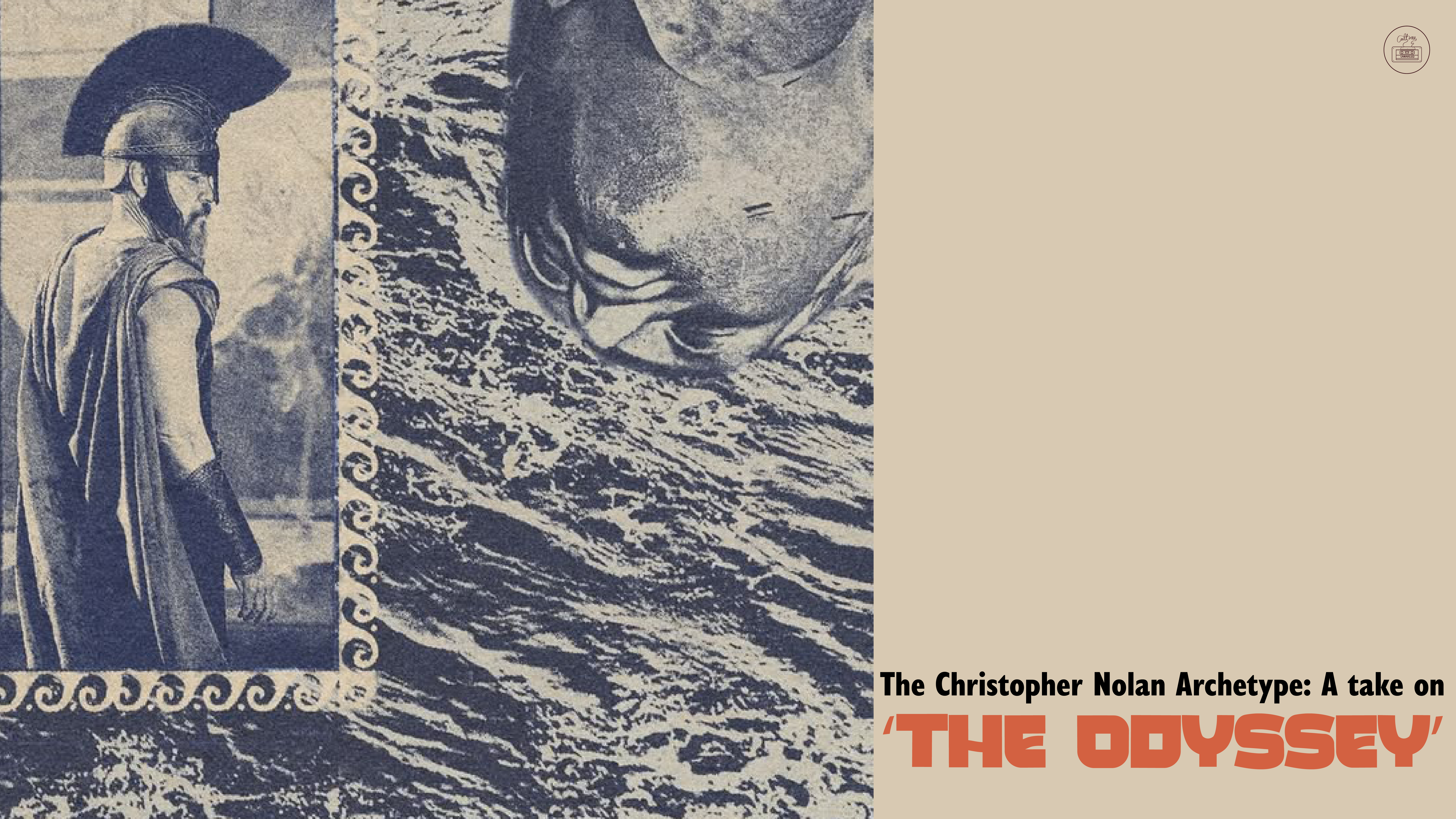
But then, we heard what his next project would be: The Odyssey.
A story nearly 3,000 years old, composed before writing even existed to record it, sung aloud for generations before it was ever put on a page.
At first glance, it looks like a detour, the futurist taking a break to do something safer and classical. But detours are rarely accidental for directors this deliberate.
If you look closely at his films over the years, you find characters who are, in one way or another, lost.
Men searching for home, identity, meaning, or reunion. Whether it is Cobb trying to return to his children in Inception, Cooper crossing the cosmos to reunite with his family in Interstellar, or Leonard struggling to recover himself in Memento, Nolan’s films have often been journeys of people trying to find their way back to what matters most.
Odysseus is simply the oldest version of that same man. Strip away the wormholes and the dream layers, the inverted timelines and the unreliable memory, and what’s left is a figure who has been waiting in Nolan’s filmography from the beginning, someone far from home, working against time, trying to get back to the people who give his life meaning. Nolan’s career has been circling these ideas all along, and The Odyssey is not a departure from his work but its logical destination.
What makes this choice so fascinating is that it seems to run against the grain of the age. The culture that this film is being released into, is obsessed with novelty. Every year brings a new technology, a new platform, a new disruption, some new innovation. But there’s a growing sense that innovation alone can’t answer our deepest questions, and that speed isn’t the same as depth. But technological innovation was never meant to carry that weight.
For that, we tend to return to older sources of wisdom, myths, traditions, philosophy, and stories that existed long before us. Of course, we can’t relate to them word for word, and their value may not be in the specifics, which belong entirely to a world that no longer exists. But their value is in what survives the translation across centuries, the shape of certain experiences and truths that keeps recurring no matter how much the surface details change.
Perhaps that helps explain why a story this old still feels worth telling. And why a filmmaker so closely associated with the future, has taken us back to the past.
At the peak of his career, when he has the resources, influence, and technology to imagine any future or world he could, he chose a story that asks a far older question:
after all the wandering, striving, innovating and achieving, what is it that is worth returning to?
Whether it is Cobb trying to return to his children in Inception, Cooper crossing the cosmos to reunite with his family in Interstellar, or Leonard struggling to recover himself in Memento, Nolan’s films have often been journeys of people trying to find their way back to what matters most.