
A look into L’Engle’s A Wrinkle in Time
To Act in Faith
Written by Pratibha Sarah Jacob
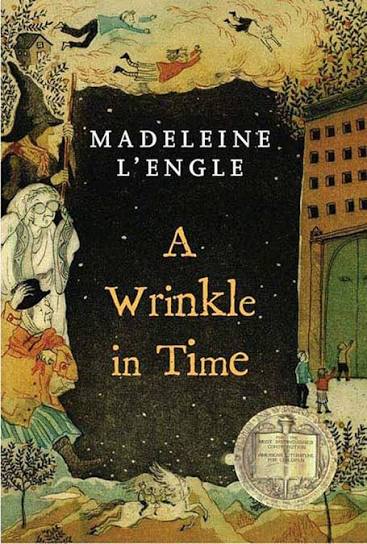
When troubles come knocking your door, what do you do? Face head on? Or look for someone who could solve it for you?
Margaret (Meg) Murry, the protagonist of the Sci-fi novel A Wrinkle in Time (1962), was at such a cross-road in her life too. Written by Madeleine L’Engle, the story revolves around the Murry family. And a mission Meg undertakes, along with her brother, and a friend to save their father who needs their help.
When she learns she must set off on a journey along with her younger brother Charles Wallace and her friend, Calvin O’Keefe, Meg doesn’t hesitate. Neither does she ask too many questions. She is comfortable with the discomfort of the not knowing. She trusts and takes a leap. Literally. For they travel through time and space to be on planet Camazotz to save their father.
Camazotz is the most beautiful and perfect planet one will ever come across. With its perfect citizens and their perfect kids in perfect houses on perfect lanes, the place could easily be a model utopia. But look closely, you would find something unsettling. For beneath the perfection is an unspoken fear: fear of deviation from the norm. Fear of going out of line that’s already been drawn for all by IT, the centralized brain that has the absolute control.
Although confident in his ability to resist, Charles Wallace is the first to give in to IT, leaving Meg and Calvin to figure out the rest on their own. Meg panics. But doesn’t give up. Along with Calvin, Meg proceeds to not only find her father but also save him from the column in which he has been confined all this while.
This is, however, where Meg’s faith comes crashing down, like a house of cards. Now that her father was free, she was hoping that he will take care of the rest. That she could sit back and everything will be alright in the end. And so, when she realizes that her father is equally helpless, she is disappointed.
Disappointment turns into bitterness that begins to point fingers. At the end, when she figures there’s no other way but for her to take up the task of saving Charles, she says ‘yes’ to the task, but not without resentment. And not without an explicit annoyance.
Quickly, though, she is reminded that blind conformity isn’t what is expected of her:
“We want nothing from you that you do without grace. … or that you do without understanding.” Meg is told.
Meg’s story, thus, becomes a story of one maturing in faith. From going with the flow, trusting the loved ones around, Meg grows to have a kind of faith, where she learns to trust the unknown. If she were to let go before, she is now called to act. If she simply had to follow before, she is now called to take up the cross. Not from a lack of choice. But out of an understanding of her calling.
She doesn’t suddenly emerge confident. No. Quite the contrary, her fear grows with every step she takes forward. More than what she used to feel when she had others to lean on. The difference now is that she decides to keep walking anyway. Fully aware of the uncertainty, fully aware of how scared she is. Because to act in faith is not to have everything figured out, but to trust enough to keep going still with grace.